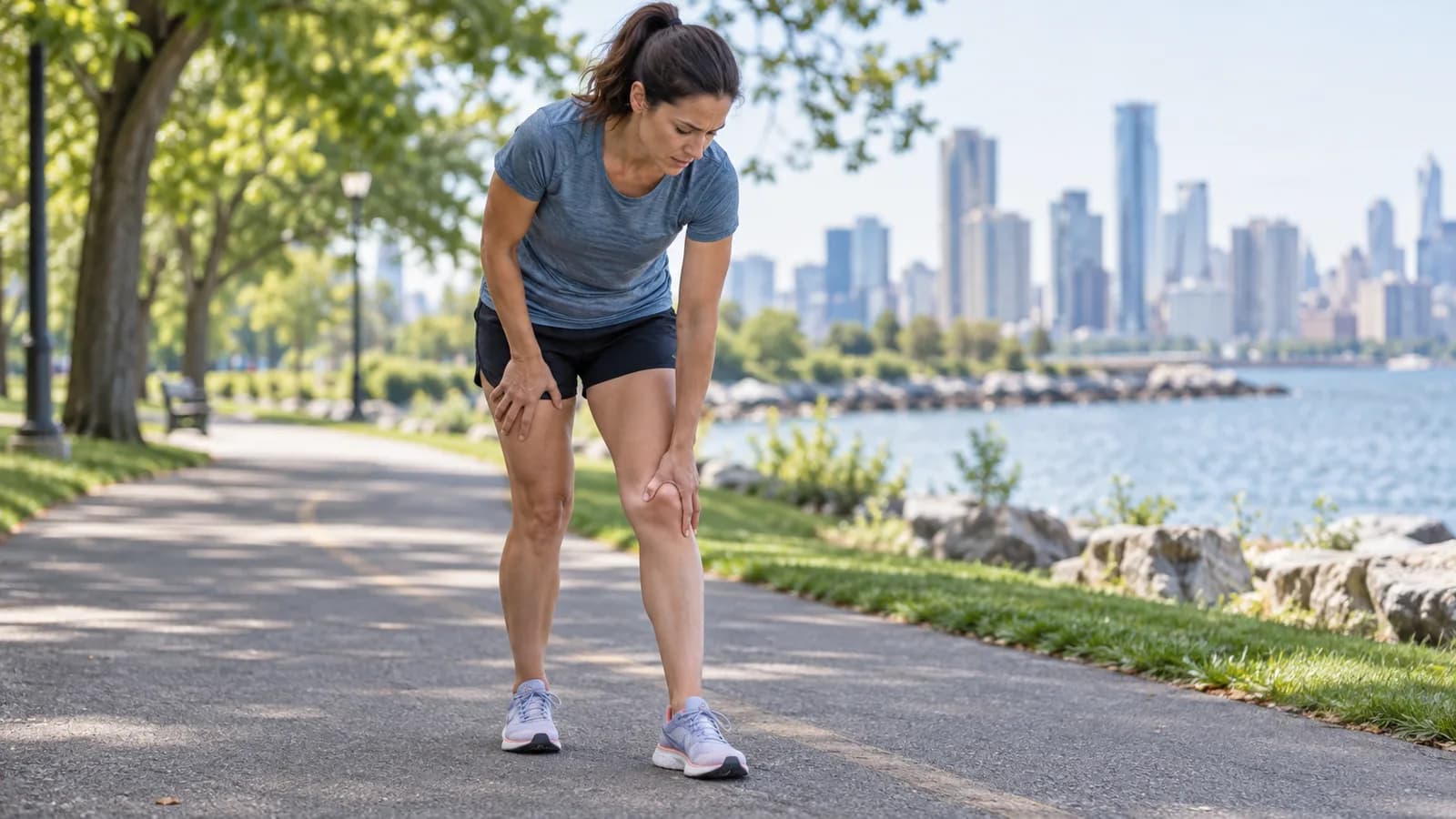
Knee pain when running often develops when the demands of training exceed what the knee currently tolerates. When the pain is around or behind the kneecap, one common condition that we see in clinic is patellofemoral pain syndrome, often called runner’s knee. Changes in training, muscle capacity, patellar tracking changes, and running mechanics can contribute, but none of these alone explains every sore knee.
Usually the story goes like this: the first few kilometres feel fine, then an ache develops at the front of your knee. The day after your run, stairs become uncomfortable, and sitting for too long causes a stiff achy knee to return. You take a few days off, feel better, and find the pain returns on your next run.
That pattern deserves more thought than “running is bad for your knees” or “your glutes aren’t firing.” The useful questions are what is painful, what has changed, and what your knee needs to tolerate running again.
What is anterior knee pain?
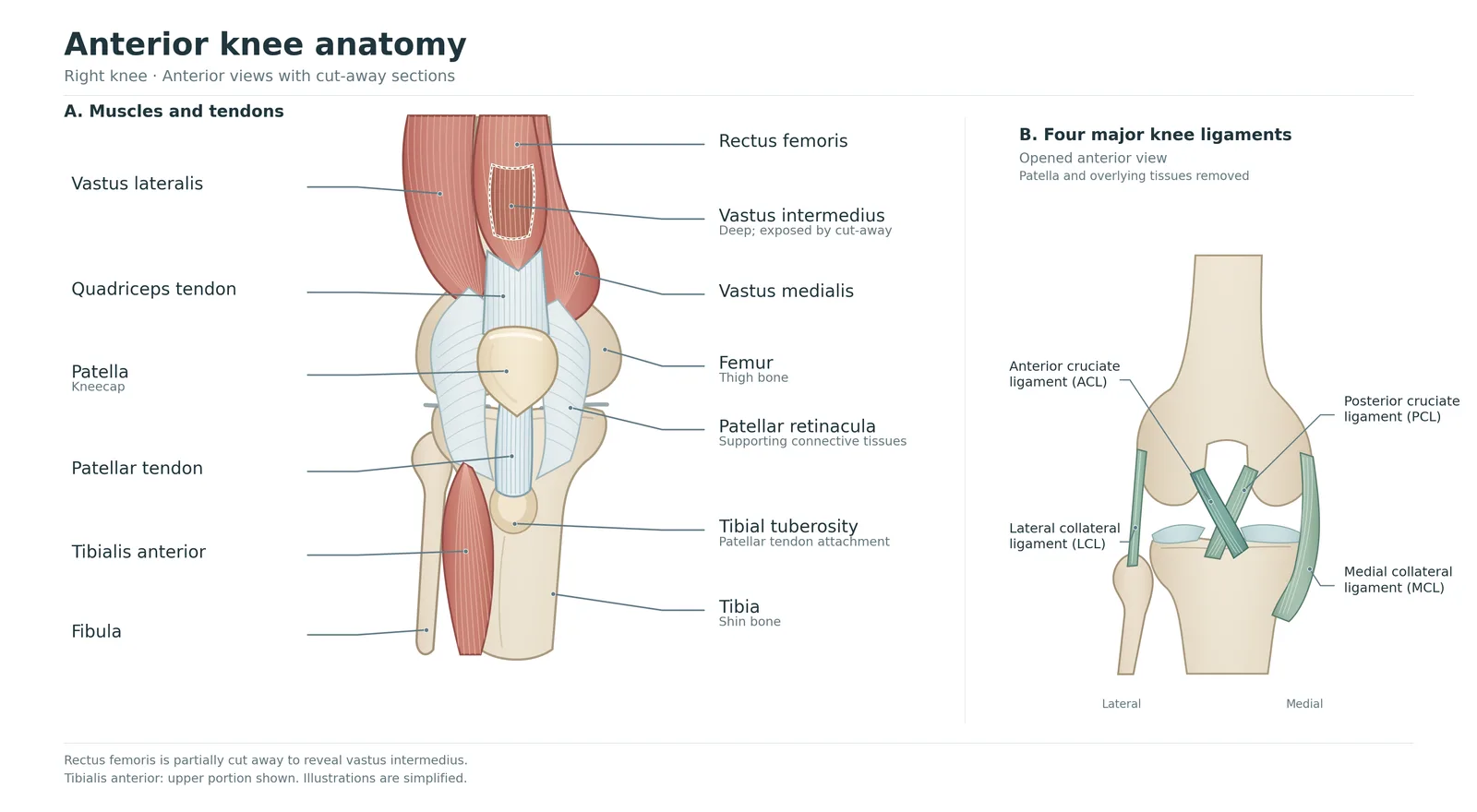
If the front of your knee aches when you run, you may hear it called runner’s knee, or patellofemoral pain syndrome (PFPS). This describes a familiar pattern: pain around or behind the kneecap that tends to show up with running, squatting or stairs. Some people also notice it after sitting with the knee bent for a while.
The reason for that broader label is that the kneecap is part of a connected system. The quadriceps tendon pulls on it from above, while the patellar tendon connects it to your shin below. Around it sit the joint lining, a fat pad and other supportive tissues. Several sensitive structures in this area can contribute to the pain you are feeling.
Because these tissues sit close together, the place you feel discomfort does not always tell us which one is responsible. We can often recognise the pattern and the activities that aggravate it, even when we cannot confidently isolate one pain generator.
In practice, that gives us a useful starting point. We look at when the pain began, what changed in your training and which activities your knee currently struggles to tolerate. Those findings help us decide how to adjust your running and rebuild capacity, while checking whether there is a more specific condition that needs a different approach.
What happens to your knee with each running step?
Running repeatedly asks one leg to support and stabilize your truck, along with transferring force from your working muscles into the ground. As you land, your knee bends to absorb the impact, and the quadriceps (the muscles at the front of the thigh) help control that movement.
When they contact, the pull of the muscles contributes to compression between the kneecap and the femur. This means knee loading comes from both contact with the ground and forces generated by your own muscles.
This type of loading is normal, and actually quite good for your knee. Your knee is built to handle force, and training can improve its capacity. Problems arise when the amount or distribution of loading is poorly tolerated because it outpaces your knees ability to tolerate it.
A useful clinical framework is capacity versus demand: what you ask the knee to do compared with what it can currently manage. It is a framework for making decisions, rather than a complete explanation of pain. It chronic cases, persistent pain can also involve changes in pain sensitivity, psychosocial factors, and consideration of more factors beyond just the knee itself.
What causes knee pain when running?
Training intensity has changed faster than your knee can adapt.
A recent training change is worth investigating early. Volume means how much running you do; intensity refers to how demanding the running is, including pace and effort.
Imagine moving from three comfortable 5 km runs each week to four runs, a longer weekend run and an interval session. Each change might look reasonable on its own. Together, they create a substantially different week that your knee needs to recover from. If you stack a few of these weeks together, now your knee is constantly fighting to keep up.
Distance alone misses part of the picture. Replacing flat waterfront runs in Toronto with repeated hills changes the task. Descents on hilly courses involve additional braking demands, and may be particularly provocative for a sensitive knee.
This makes “too much, too soon” a useful clinical consideration, but it is a little overly simplistic injury prediction rule. Research has found inconsistent relationships between injuries and individual training measures such as weekly distance or intensity. The overall picture matters more than any one factor.
For example, a large 2025 study followed 5,205 runners and found higher overuse-injury rates when an individual run was more than 10% longer than the runner’s longest run in the previous 30 days. It did not find the same relationship with week-to-week distance increases.
The practical lesson is to then examine individual sessions as well as weekly totals. A sensible progression depends on your recent training and response, not just staying below a percentage. Total volume, longest run volume, intensity, how many rest days between runs, strength training, job demands, race history, elevation changes, etc, all factor into how much load your knee needs to recover from.
Strength and movement control may be relevant
Knee stability during running involves more than the ligaments holding the joint together. Muscles help manage loading and control the dynamic movement while you support your weight on one leg.
For running, there is no single muscle that is the most important or should be the single target of a rehabilitation program. The quadriceps need to be strong to be able to absorb impact and decelerate your body when landing. Your hips and ankles must be strong to ensure stability of your knee and create repeatable movement patterns that resist fatigue.
However, there is a difference between finding weakness in someone with pain and proving that weakness caused it. A systematic review of prospective studies did not identify hip weakness as a consistent predictor of future patellofemoral pain. Depending on the population, quad strength has also been show to be more or less important.
Even dynamic knee valgus, a knee that moves inward with loading, can look problematic but may not be clinically relevant. This movement can be worth assessing, especially if changing it improves symptoms. But, it does not automatically mean the knee is unstable or damaged.
The clinical question is whether strength or movement control is relevant to your symptoms and running demands. This is why clinical assessment is as much an art as it is a science. Everyone comes with so many individual characteristics, it takes a skilled clinician to figure out what is important, what is not, and what is worth fixing first.
Your stride can change the demands on the knee
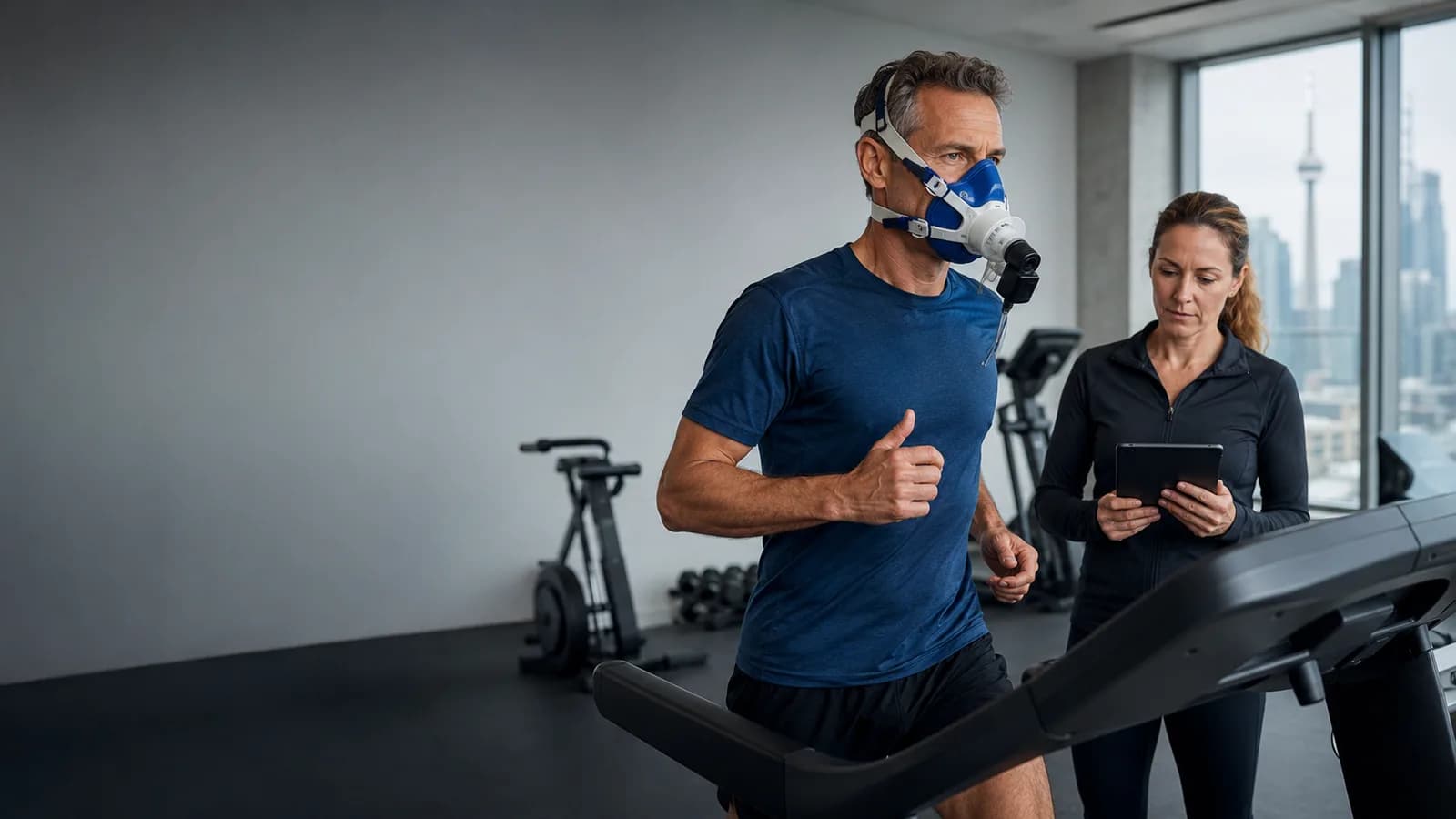
Running biomechanics describes how you move and the forces involved. It can help explain why one running pattern places different demands on the knee than another. There are many different styles of running mechanics that will work, but there are some general principles that apply to most stride styles.
Overstriding refers to reaching excessively far ahead of your body when the foot lands. It is about where the foot lands relative to your body, rather than simply whether you heel strike or not. You can heel strike without overstriding.
A longer reaching step increases braking demand if it lands too far in front of your centre of mass. We want to be able to distribute loading forces through the hip, knee and ankle, and overstriding can over bias the knee. This is one potential mechanism where the knee is getting more load then it can currently tolerate.
An adjustment that some runners make is to shorten the step while maintaining the same speed. This requires a higher cadence, meaning more steps per minute.
Laboratory research and systematic reviews show that a modest cadence increase can reduce several measures of knee loading. A foundational study estimated lower peak patellofemoral joint force with a 10% increase in step rate at the same speed.
That provides a reason to trial the change in selected runners. It does not mean everyone who overstrides will develop knee pain, or that everyone can simply increase cadence to fix it.
Should you change your running form?
A gait change is most useful when there is a clear reason to try it and a way to assess the response.
A clinician might trial a cadence increase of roughly 5–10% at your usual easy pace, rather than chasing an arbitrary target. For someone running at 160 steps per minute, 168 represents a 5% increase. The aim is shorter steps at the same speed, not running faster.
There is no universal requirement to run at 180 steps per minute. Your pace and individual characteristics matter, and an unnecessarily large change can feel awkward or increase effort.
Evidence for pain relief is encouraging but incomplete. A small 2024 trial found that cadence-focused or impact-focused gait retraining improved running pain more than no intervention at six months. An earlier trial of 69 runners found that adding gait retraining or exercise to education about symptoms and training did not produce superior symptom improvement.
Different programmes and comparison groups help explain why these findings differ. They support considering gait retraining, rather than prescribing it to every runner.
Nor should every sore-knee runner switch to landing on the forefoot. That can reduce some knee demands while increasing demands at the ankle and Achilles tendon. A change should be introduced gradually and judged by its overall effect. We don't want to trade one overuse injury for a different one.
What should you do if your knee hurts when you run?
Adjust the training that aggravates it
The first step is to identify which parts of your running are poorly tolerated.
As a practical example, if discomfort consistently starts late in a run, a shorter session or run-walk format may be worth trialling. If descents aggravate it, a flatter route may be more tolerable.
These are clinical reasoning strategies, not universal prescriptions. Some runners can continue with modified running; others need a temporary break while the problem is assessed.
Consider the response during the run, afterward and the following day. Pain that escalates, changes your gait or leaves everyday activities more painful suggests the session needs adjusting. A clinician can help establish appropriate limits once the likely diagnosis is clearer.
Replacing a painful run with cycling or another activity can maintain fitness, provided that activity is comfortable. Cross-training is still training and should be included when considering your total workload.
Build capacity with appropriate exercise
Exercise therapy has stronger support for patellofemoral pain than the idea of finding one perfect running style. The 2024 best-practice guide recommends knee-targeted exercise supported by education, with hip-targeted exercise added according to the person’s needs.
Depending on tolerance, a programme might include knee extensions, squats, step-ups or split squats, alongside relevant hip and calf work. The exercise name matters less than choosing a suitable starting load and progressing it.
A knee that is sensitive to deep squatting may initially need a shallower range or a different exercise. The aim is to rebuild what it can tolerate, rather than repeatedly provoke it.
Taping or other supporting treatments may help selected people participate in rehabilitation. They should fit an active plan rather than standalone treatments.
Use an assessment to make the plan specific
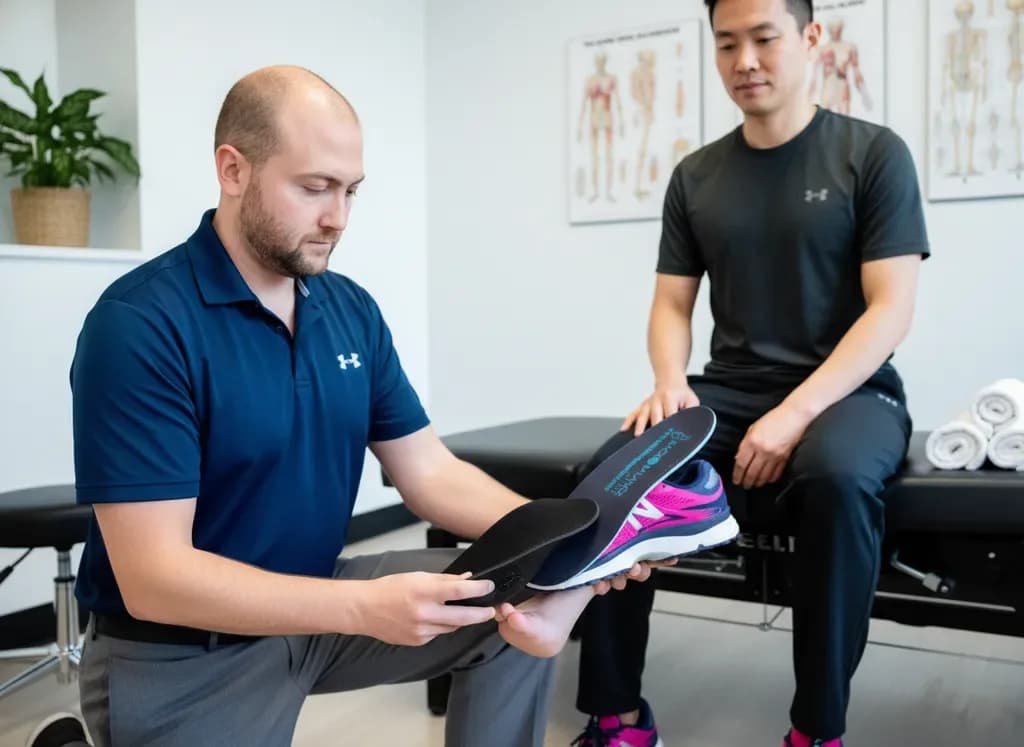
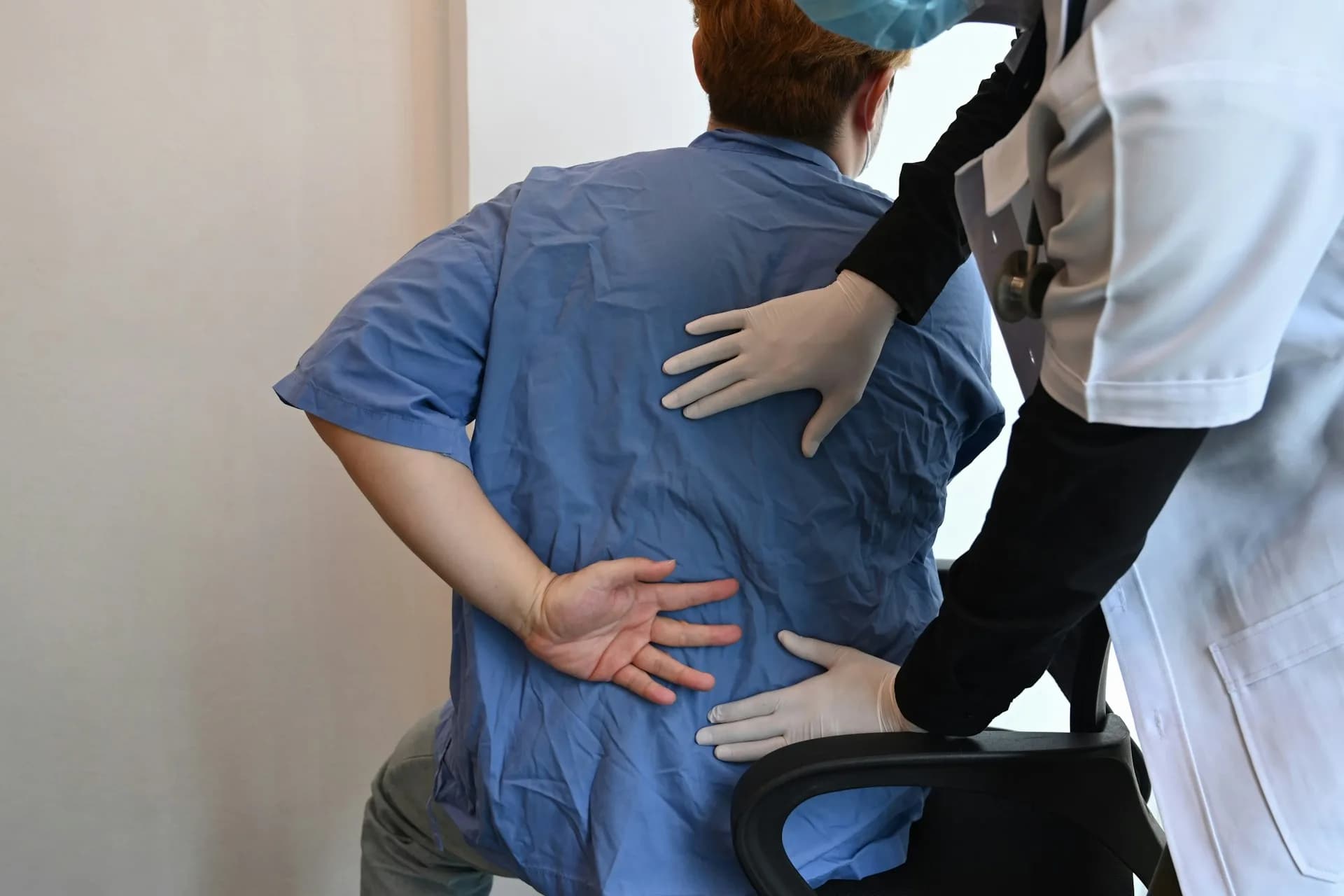
A useful running injury assessment combines your training history, symptom behaviour and physical examination with observation of how you run.
Video can help identify a change worth testing. It cannot tell us, by itself, which tissue hurts or why the pain started.
For a runner whose pain followed a substantial training increase, the plan may centre on adjusting training and rebuilding capacity. For another runner, a small gait change may also be useful. The findings should guide the plan.
When does knee pain need medical assessment?
Seek prompt medical assessment if your knee is markedly swollen, you cannot bear weight or move it, it locks, repeatedly gives way, or symptoms follow a significant injury. A hot, red knee with fever or feeling unwell also needs prompt medical assessment.
Persistent or worsening pain that limits running or everyday activities deserves assessment too. These symptoms should not be managed simply by experimenting with your stride.
If your knee feels better after a few days off but hurts again when you restart, the next step is to understand why running still aggravates it. Your training history and assessment help establish which demands need adjusting and what your rehabilitation should address. From there, the plan is to make running manageable again while building the strength and tolerance for longer distances or faster efforts. Progress should follow how your knee responds during each run and afterward, giving you a practical way to work toward the running you enjoy.
If knee pain keeps interrupting your training, book an initial assessment at Back in Balance Clinic to discuss what is contributing to your symptoms and develop a plan for your return to running.