
As the body adapts to accommodate a growing baby, it is common to experience new aches, pains, stiffness, and changes in how you move. Chiropractic care can be an excellent option for managing these musculoskeletal complaints during pregnancy.
That said, it's understandable to have questions about what treatment involves and whether it is safe. The answer depends in part on the individual and the type of care being considered.
One important distinction to make before we discuss safety is:
Chiropractic care is not just spinal manipulation
When you think of chiropractic, you might picture a spinal adjustment. But that’s only one small part of the care we can provide.
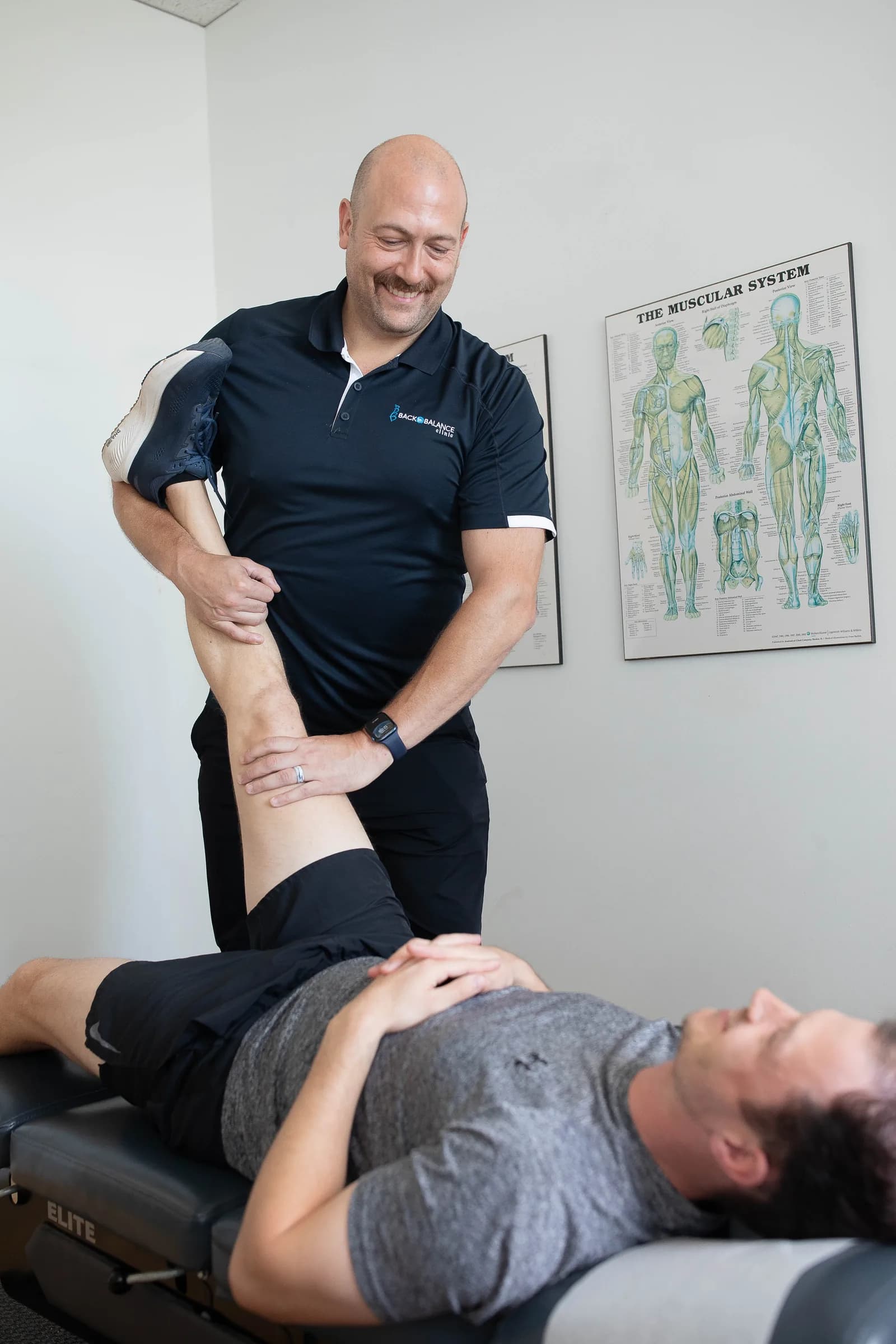
Chiropractic care focuses on the musculoskeletal system, and we use a range of techniques and forms of treatment to help you feel and move your best. Some examples include:
- Education about your condition
- Advice on activity modification to keep you comfortable
- Exercise prescription
- Movement advice
- Instruction on the use of pregnancy supports
- Soft-tissue release
- Joint mobilization (a different, lower-force approach than manipulation)
For a pregnant patient, treatment should be individualized based on their symptoms, health history, stage of pregnancy, preferences, and clinical findings. If one form of treatment isn’t right for you, there may be other appropriate options.
But, if you're asking whether chiropractic care is safe during pregnancy, there's a good chance your concern is specifically about the adjustment.
There are situations where spinal manipulation may not be appropriate for a particular patient. Pregnancy-related changes in connective tissue and joint stability, hypermobility, certain health conditions, or simply how someone is presenting on the day of treatment can all influence whether it’s a good idea.
But deciding that spinal manipulation isn't appropriate does not mean that chiropractic care as a whole is off the table.
In fact, current guidance around pregnancy and postpartum care emphasizes a flexible approach, integrating manual care with education, exercise, and other appropriate forms of care listed above.
So what does the research tell us about safety?
The available literature on adverse events associated with spinal manipulation during pregnancy is limited. Reviews of the literature have identified a small number of reported adverse events. However, because the evidence consists largely of case reports and small studies, it can’t be used to determine how frequently these events occur.
Of course, the absence of many reported adverse events doesn't mean we can say there is no risk either. This is one reason that appropriate screening, clinical judgment, informed consent, and individualized treatment matter.
Pregnancy changes the way treatment is approached
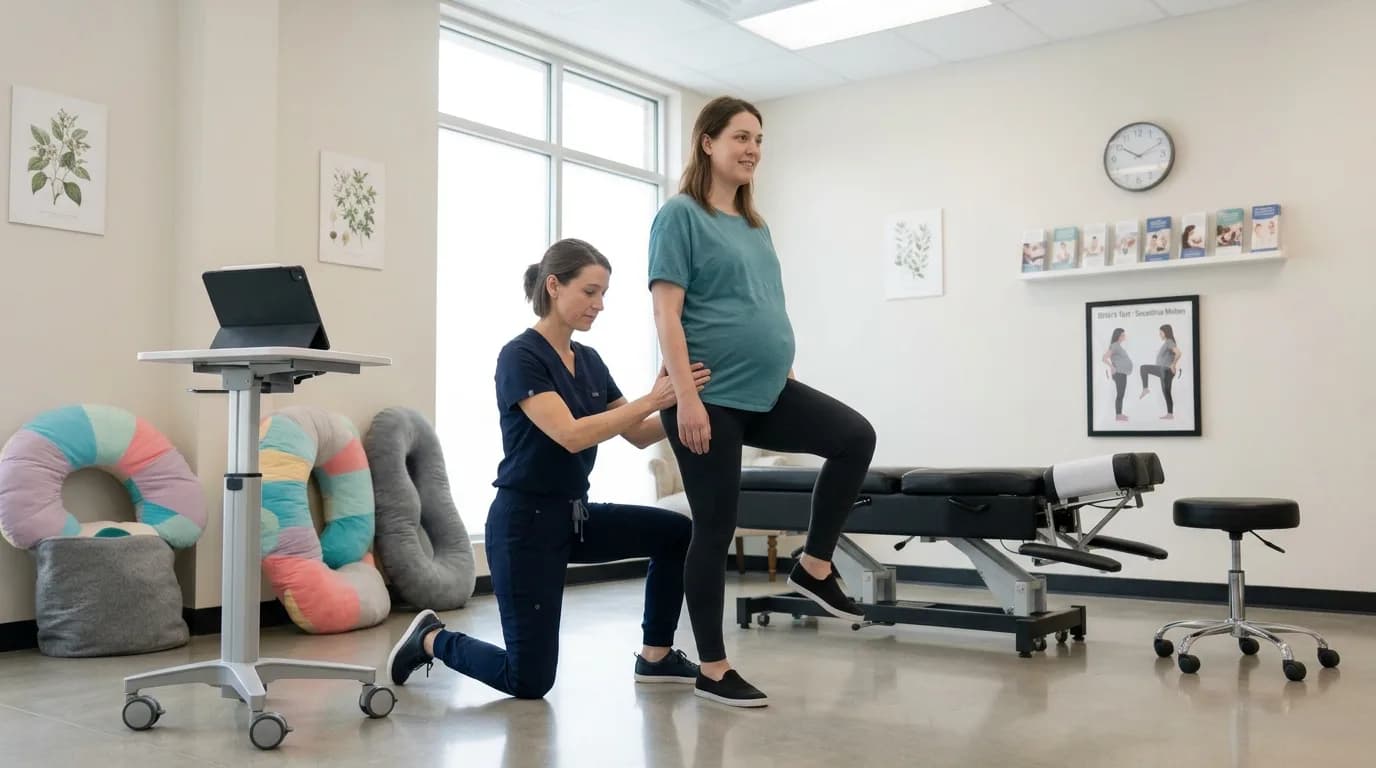
As pregnancy progresses, there are changes in posture, balance, joint stability, and how a person tolerates different positions and movements. A good treatment plan takes these changes into account.
In practice, this might mean changing how a person is positioned for manual care, using different techniques, or choosing a completely different approach depending on comfort and clinical findings.
Sometimes, spinal manipulation simply isn't warranted. And that’s okay.
Here is the approach I take with my pregnant patients: we look at what’s bothering you, what has changed during your pregnancy, your goals and what you’re comfortable with, and come up with a plan that makes the most sense for you. Reassessment and adaptation are built into the process.
What can chiropractic care help with during pregnancy?
Many of the physical complaints that arise during pregnancy are musculoskeletal in nature. Low back pain, pelvic girdle pain, hip discomfort, and other aches and pains can become part of daily life as the body adapts to pregnancy.
For some, chiropractic care can be a non-pharmacological option to help manage these symptoms. This can be particularly appealing during pregnancy, when medication choices may be more limited or if you prefer to avoid medication when possible.
The goal isn’t necessarily to eliminate every ache and pain of pregnancy. Instead, care can be about helping you move more comfortably, maintain your usual activities, and manage symptoms as your body changes.
When a Chiropractor isn’t the person you need
Chiropractic care is appropriate for many musculoskeletal concerns, but not every symptom in pregnancy should be treated as something mechanical.
Some symptoms need medical assessment rather than a chiropractic appointment. For example, vaginal bleeding, leaking fluid from the vagina, chest pain, significant difficulty breathing, fainting, or regular painful uterine contractions should be assessed by your obstetric care provider. This isn’t a complete list. If something feels off during pregnancy, it’s always best to check in with your midwife, GP, or obstetrician.
A chiropractor should also recognize when something falls outside their scope and refer appropriately. Knowing when not to treat is an important part of providing safe care.
So, is chiropractic care safe during pregnancy?
For many pregnant people, chiropractic care is a safe and useful option.
The important thing is that care is tailored to the individual. Spinal manipulation is only one tool, and it may or may not be appropriate or necessary for everyone at every visit.
Safe care means knowing what is appropriate, adapting treatment when needed, and recognizing when someone needs care beyond our scope.
If you're pregnant and dealing with back, pelvic, hip, or other musculoskeletal discomfort, I’d be happy help you figure out what kind of approach makes sense for you.
Ready to talk about your options? Book an appointment with Dr. Clarke.
References:
- Stuber KJ, Wynd S, Weis CA. Adverse events from spinal manipulation in the pregnant and postpartum periods: a critical review of the literature. Chiropr Man Therap. 2012;20:8.
- Weis CA, Stuber K, Murnaghan K, Wynd S. Adverse events from spinal manipulations in the pregnant and postpartum periods: a systematic review and update. J Can Chiropr Assoc. 2021;65(1):32-49.
- Weis CA, Pohlman K, Barrett J, Clinton S, da Silva-Oolup S, Draper C, et al. Best-practice recommendations for chiropractic care for pregnant and postpartum patients: results of a consensus process. J Manipulative Physiol Ther.2022;45(7):469-489.
- Canadian Chiropractic Guidelines. Pregnancy & Postpartum Musculoskeletal Health. Updated July 2026.