
Pain around the pubic bone, groin, hips, or sacroiliac joints can make pregnancy uncomfortable. Maybe walking has become painful, turning over in bed is difficult, or getting in and out of the car has become something you now have to think about.
Pelvic girdle pain is a common pregnancy-related concern, and it is something I regularly assess and treat in my practice. In this article, I’ll explain what pelvic girdle pain is, why it can develop, and how individualized chiropractic care may help you move more comfortably during pregnancy.
Key takeaways
- Pregnancy changes your body weight, posture, movement, and the demands placed on the muscles and joints.
- Pelvic girdle pain may affect the pubic symphysis at the front of the pelvis, the sacroiliac joints at the back, or both.
- Not all low-back, hip, groin, or pelvic pain in pregnancy is pelvic girdle pain, so an individualized assessment matters.
- Management is usually multimodal: education, pacing and activity modification, individualized exercise, and selected supportive treatments can be combined based on your symptoms and goals.
- Most people improve after birth, although recovery varies and persistent symptoms deserve follow-up.
What is pelvic girdle pain?
Pelvic girdle pain is pain related to the joints and surrounding tissues of the pelvis. You may feel it at the front of the pelvis near the pubic bone, at the back near one or both sacroiliac joints, or in nearby areas such as the low back, buttocks, groin, hips, or thighs.
The symptoms can range from mild discomfort to pain that significantly affects daily activities. Some of the movements that commonly aggravate symptoms include:
- Walking or standing for longer periods.
- Turning over in bed.
- Getting in and out of a car.
- Going up or down stairs.
- Standing on one leg to get dressed.
- Moving from sitting to standing.
Pelvic girdle pain is not simply “normal pregnancy pain” that you need to push through. While it is common, support is available when symptoms affect your mobility, sleep, mood, work, or ability to care for yourself and your fam
Understanding the pelvic girdle
The bones of the pelvis form a ring. They come together at three main joints:
The left and right sacroiliac joints, located at the back of the pelvis where the sacrum meets the ilium on either side, and
The pubic symphysis, located at the front where the two sides of the pelvis meet.
These joints work with the surrounding muscles and ligaments to transfer load between the upper body and legs. Muscles of the abdomen, hips, back, and pelvic floor all contribute to how the pelvis manages these loads during movement and everyday activities.
A healthy pelvic girdle does not need to be perfectly still or perfectly symmetrical. It needs to adapt to the demands placed on it. Pain can develop when the overall demands of pregnancy, daily activities, sleep disruption, previous injury, muscle capacity, and other factors exceed what your body is currently tolerating.
Why can pelvic girdle pain develop during pregnancy?
Pregnancy involves many changes that can affect the way your pelvis and spine manage load. These include:
- A growing baby and changing weight distribution.
- Changes in posture, balance, and walking pattern.
- Increased demands on the abdominal, hip, back, and pelvic floor muscles.
- Changes in sleep, activity, work, and caregiving routines.
- Pregnancy-related changes in connective tissue and joint mobility.
- Reduced tolerance for certain positions or movements as pregnancy progresses.
These factors do not affect everyone in the same way. Some people remain comfortable throughout pregnancy, while others develop pain with specific activities or positions.
It is important not to interpret pelvic girdle pain as meaning that your pelvis is “out of alignment” or damaged. Pain is influenced by many factors, including the sensitivity of the tissues, the amount and direction of load, muscle capacity, sleep, stress, previous injuries, and the activities you need to perform each day.
Will pelvic girdle pain last forever?
Many pregnant people improve substantially during pregnancy or after delivery, but recovery is different for everyone.
Some people notice that their symptoms settle with activity changes, exercise, support, and appropriate care. Others continue to experience symptoms for longer and benefit from reassessment and a more structured rehabilitation plan.
Research suggests that most people with pregnancy-related pelvic girdle pain improve after delivery, although not everyone recovers at the same rate. If your symptoms are limiting your activities, affecting your sleep, or making you anxious about movement, you should seek support.
How can a chiropractor help?
When I assess someone with pregnancy-related pelvic or low-back pain, I want to understand more than just where the pain is located. I also want to know things like which activities are difficult, what movements aggravate your symptoms, how you are sleeping, and what you need to be able to do in your daily life. For one person, the priority may be walking to work with less pain; for another, it may be sleeping more comfortably, caring for an older child, continuing exercise, or preparing for birth.
A clinical examination may include observing walking, transfers, stairs, single-leg loading, and other movements that matter to you. A small group of pain-provocation and functional tests may support a pelvic girdle pain presentation after the low back, hip, and more serious causes have been considered. No single test establishes the diagnosis on its own.
Care is adapted to your comfort and goals, health history, stage of pregnancy, and clinical findings. Depending on your situation, it may include:
- Education about PGP and reassurance that pain does not automatically mean damage.
- Exercise and rehabilitation tailored to your current capacity and goals.
- Advice on modifying aggravating activities.
- Strategies for rolling in bed, getting in and out of a car, lifting, and other daily movements.
- Recommendations regarding pregnancy supports or taping when appropriate.
- Guidance around sleep-position and pillow placement.
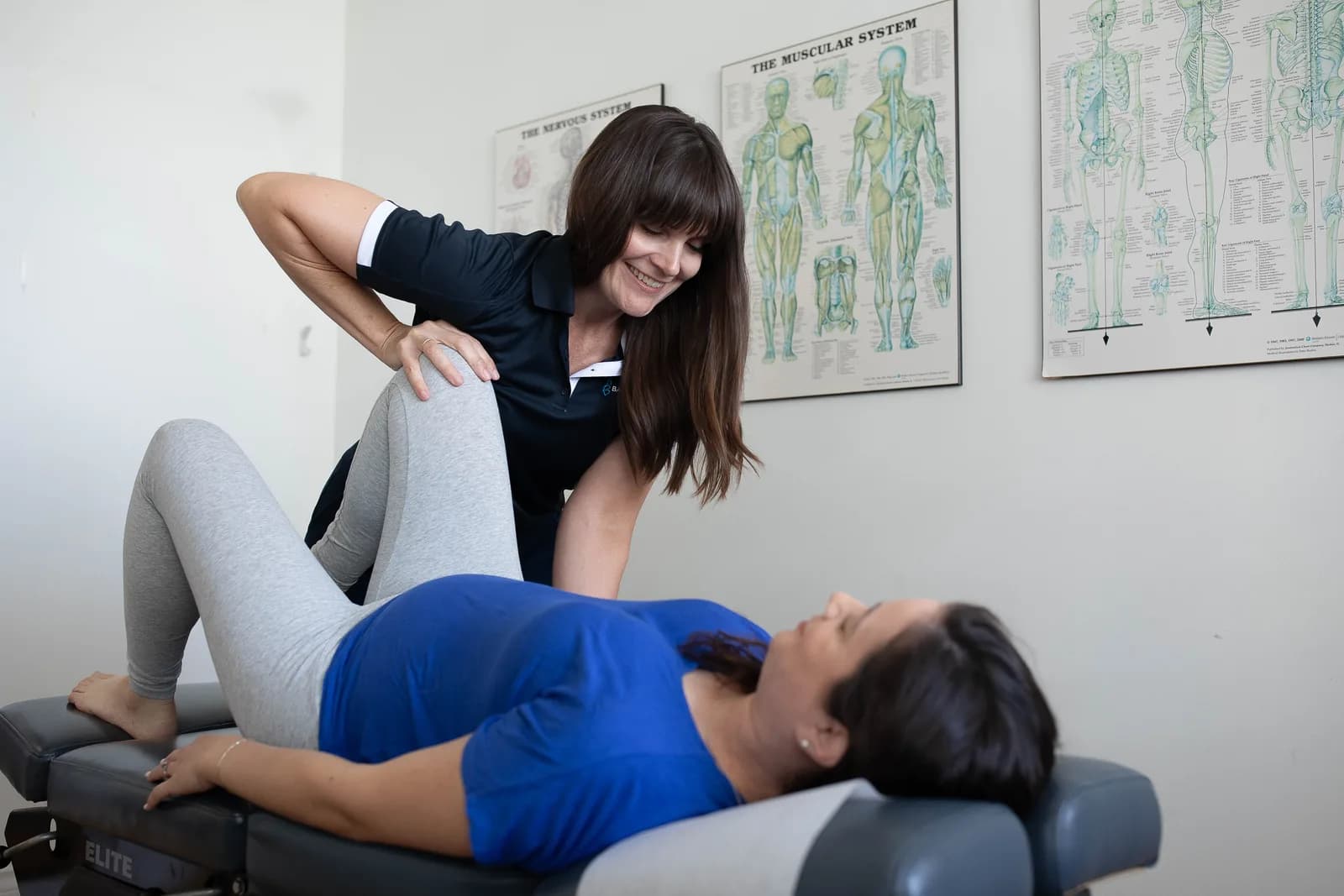
- Gentle hands-on care, such as mobilization, soft-tissue techniques, or other manual approaches when it may help you move more comfortably.
- Medical acupuncture when clinically appropriate and agreed upon.
- Referral or co-management with a pelvic-health physiotherapist, midwife, obstetrician, family doctor, or another provider when needed.
Hands-on care may be helpful for short-term comfort or improved movement for some patients, but it should not be the only part of the plan. Current guidance emphasizes active rehabilitation, self-management, and regular reassessment rather than passive treatment alone.
Learn more about pre and postnatal care at Back in Balance Clinic.
Concerned about safety? Learn more here: Is Chiropractic Care Safe During Pregnancy?.
When should you seek medical assessment?
Pelvic, hip, abdominal, or low-back pain during pregnancy can have different causes. If you experience severe or rapidly worsening pain, vaginal bleeding, fluid leakage, fever, significant trauma, new or progressive weakness or numbness, loss of bladder or bowel control, or any other symptom that concerns you, contact your midwife, family doctor, obstetrician, or another appropriate healthcare professional promptly.
If you are unsure whether your symptoms are appropriate for chiropractic care, please ask! I offer complimentary virtual or phone appointments for this reason. You can book one here.
The bottom line
Pregnancy-related pelvic girdle pain can affect the pubic bone, sacroiliac joints, low back, hips, groin, and nearby muscles. It may make ordinary activities such as walking, turning in bed, using stairs, or getting into a car uncomfortable.
Many people improve with time, but you if symptoms are affecting your day-to-day activities or mood, seek support. An individualized assessment can help clarify what may be contributing to your symptoms and identify practical ways to keep moving comfortably during pregnancy.
If you live or work in downtown Toronto and are experiencing low-back or pelvic pain during pregnancy, you can book an appointment with Dr. Clarke at Back in Balance Clinic.
References
Vleeming A, Albert HB, Ostgaard HC, Sturesson B, Stuge B. European guidelines for the diagnosis and treatment of pelvic girdle pain. European Spine Journal. 2008;17(6):794–819.
Weis CA, Pohlman K, Barrett J, et al. Best-practice recommendations for chiropractic care for pregnant and postpartum patients: results of a consensus process. Journal of Manipulative and Physiological Therapeutics. 2022;45(7):469–489.
Elden H, Hagberg H, Olsen MF, et al. Regression of pregnancy-related pelvic girdle pain after delivery. BMC Musculoskeletal Disorders. 2016;17:48.
Sward L, Manning N, Murchison AB, Ghahremani T, McCaulley JA, Magann EF. Pelvic girdle pain in pregnancy: a review. Obstetrics & Gynecology Survey. 2023;78(6):349-357.
Canadian Chiropractic Guidelines. Pregnancy & Postpartum Musculoskeletal Health. Updated 2026.