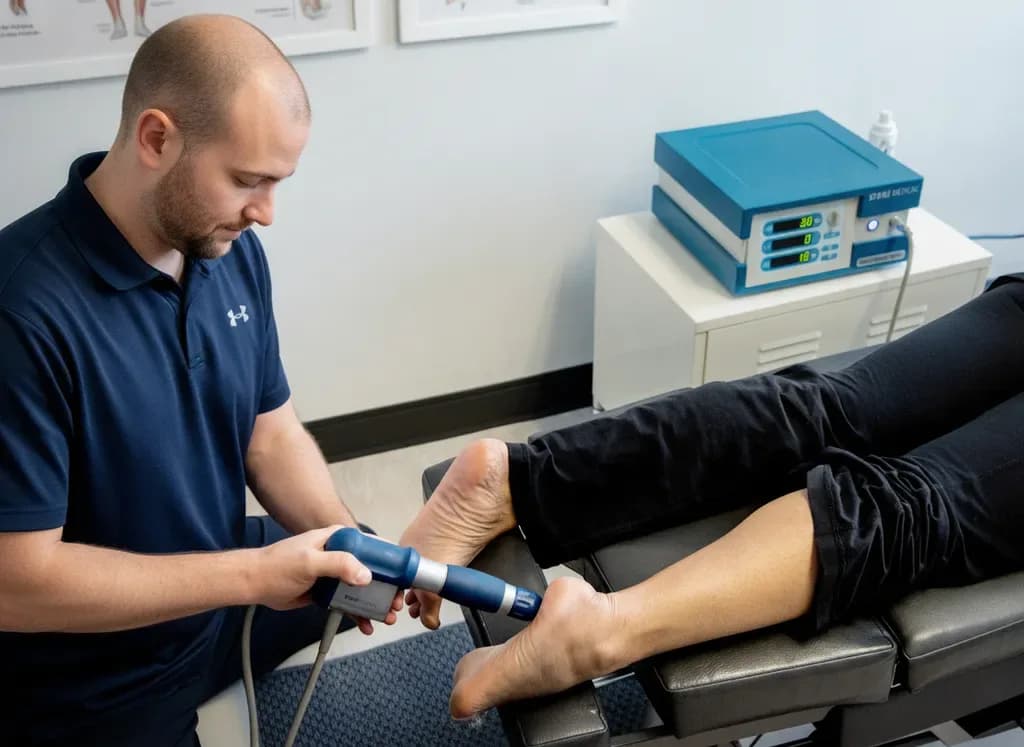


While low back pain can be severe and disabling, in most instances it can be treated conservatively through a combination of physical therapy, rehabilitation, symptom management and load management. However, there are a few symptoms that if they accompany your low back, mean that something more serious could be going on and you should seek prompt medical care.
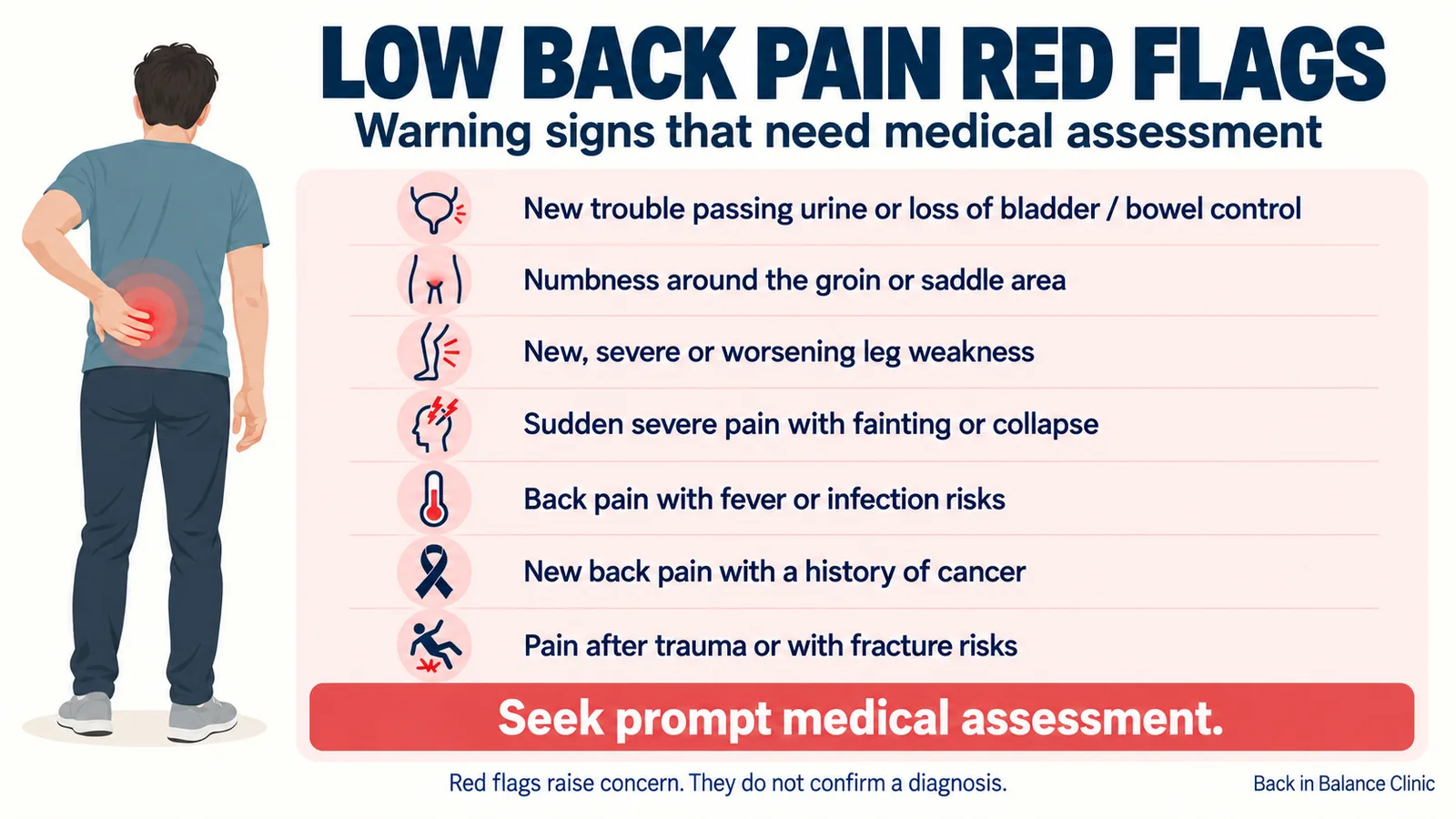
Low back pain red flags include new bladder or bowel dysfunction, saddle-area numbness, severe or progressive neurological symptoms (such as weakness), fever with concerning back pain, significant trauma, and a history of cancer with new symptoms.
The good news? Most back pain is not caused by a serious underlying condition. But deciding whether it is safe to manage normally requires more than asking how much it hurts.
The useful questions are what has changed, what other symptoms are present, and whether your medical history changes the level of concern.
What does a red flag actually mean?
A red flag is a symptom, examination finding or medical-history feature that raises the level of concern about a condition prompting further investigation or different treatment.
Red flags accompanying low back pain are a reason to assess more carefully, but not a diagnosis in themselves. A previous cancer diagnosis, for example, changes how we interpret new back pain, and may lead to a deeper investigation about how nature of the low back pain, but it does not prove the cancer has returned. It is important that red flags are interpreted in the context of the entire health picture, rather than being worrisome in isolation.
Ontario Health’s low back pain standard recommends a comprehensive assessment and investigation when serious disease is suspected. The examination and history should guide the next step, rather than every red flag symptom automatically making an MRI the starting point for everyone.
Which low back pain red flags need emergency care?
New bladder, bowel or saddle-area changes
Seek emergency assessment for these new symptoms with back or leg pain:
- Difficulty starting urination, inability to empty your bladder, or loss of awareness of bladder filling. This includes new onset incontinence.
- New loss of bladder or bowel control.
- Numbness or altered sensation around the genitals, anus or inner thighs, sometimes noticed when wiping.
These can indicate cauda equina syndrome, involving compression of the nerve bundle at the bottom of the spinal canal. These nerves help control bladder, bowel and leg function.
Do not wait until you become incontinent or until several symptoms appear. Early changes can matter. Suspected cauda equina syndrome requires urgent investigation, usually MRI, because symptoms and examination alone cannot reliably exclude it.
Severe or rapidly worsening leg weakness
Severe or rapidly worsening weakness requires emergency care. New foot drop, where the front of the foot cannot lift normally and the toes drag, needs same-day medical assessment even without bladder symptoms.
Weakness caused by nerve dysfunction can be difficult to distinguish from movement limited by pain. An examination is needed, particularly when walking is becoming difficult.
Sudden severe pain with collapse or fainting
Back pain can originate outside the spine. Sudden severe back or abdominal pain with fainting or collapse can indicate a vascular or other medical emergency. Call 911.
Which symptoms need prompt medical assessment?
Cancer history or unexplained systemic changes
Contact your physician or cancer-care team promptly for new unexplained back pain if you have a history of cancer. Progressive, unrelenting pain or pain disturbing sleep deserves particular attention. Seek same-day advice for these patterns- any accompanying neurological symptoms require emergency care. This has some nuance because a lot of back pain can make it difficult to sleep, but this is specifically back pain that worsens at night that is not related to position.
Unintentional weight loss or unexplained illness also warrants assessment, especially alongside worsening pain. These features are not specific to cancer. Of the commonly listed cancer red flags, a previous cancer diagnosis has stronger supporting evidence than many isolated symptoms.
Fever, infection risks or feeling significantly unwell
Back pain with fever or significant illness needs prompt medical evaluation, generally the same day. Concern increases with a recent serious infection, spinal surgery or procedure, immune suppression, or injection drug use.
A spinal infection is uncommon, but it can require urgent treatment. Fever may be absent, so its absence does not rule infection out when the history is concerning. If you are very unwell or develop weakness or bladder changes, seek emergency care.
Trauma or increased fracture risk
New back pain after significant trauma needs urgent assessment. Major accidents, severe pain after injury, a fall from a significant height, or neurological symptoms warrant emergency care.
A smaller fall can also matter in someone with osteoporosis, a previous fragility fracture or prolonged corticosteroid use. A fragility fracture is a fracture following relatively low-force trauma.
The same minor incident may carry different risks in different people. Research supports considering trauma, age and steroid exposure together, although the diagnostic evidence remains imperfect.
Can back pain suggest an inflammatory condition?
Yes, and this usually calls for assessment rather than emergency care. Persistent pain beginning before age 45, especially with night waking, buttock pain and improvement with movement, may suggest inflammatory arthritis affecting the spine.
Psoriasis, inflammatory bowel disease, previous eye inflammation or a relevant family history can increase suspicion. These features overlap with other causes of back pain, so the pattern needs clinical interpretation. They may justify medical or rheumatology assessment rather than repeated treatment for a presumed muscle strain.
Why a checklist cannot fully tell you whether your back pain is dangerous
Red flags are useful prompts, but many perform poorly as standalone screening tests. Studies vary in their definitions, patient populations and quality. Some recommendations therefore rely partly on expert judgment rather than precise diagnostic rules.
Night pain, older age or slow improvement can justify further questions without automatically indicating serious disease. Conversely, the absence of one warning sign cannot guarantee that everything is safe.
Your clinician will consider how symptoms fit together and reassess when the picture changes. Red flags being present indicate that we should dive deeper into specific lines of questioning to get more information but it does not automatically mean that something serious is present.
A helpful analogy is headache. There are lots of serious conditions where the main symptom is a headache (brain tumour, stroke, etc). It could also mean that you are dehydrated and need to drink more water. Just because a symptom is common in a serious condition, does not mean that symptom always points to something serious. It is worth getting checked by a medical professional, but it should also not cause you to panic.
What should you do if you are unsure?
For non-emergency concerns, an assessment at Back in Balance Clinic in Toronto can help clarify your symptoms, examine nerve function where appropriate, and determine whether treatment or medical referral is needed.
Emergency symptoms should go directly to emergency care rather than waiting for a clinic appointment.
If you are worried about your low back pain, book an assessment at Back in Balance Clinic.