
Sciatica is a term that gets used for many different types of back, buttock and leg pain. Patients will often tell me they “have sciatica” when describing anything from pain in the buttock to numbness or pain travelling all the way down the leg.
But sciatica isn't really a diagnosis on its own. It describes a pattern of symptoms, and determining what is causing those symptoms is an important part of deciding how to treat them.
A lumbar disc herniation irritating a nerve root is one of the better-known causes of sciatica. However, narrowing around a spinal nerve, spinal stenosis and, less commonly, irritation of the sciatic nerve outside the spine can produce similar symptoms. There are also several hip, muscle, joint and nerve conditions that can mimic sciatica altogether.
That's why treating “sciatica” starts with figuring out what we're actually treating.
What Is Sciatica?
Sciatica generally refers to pain that travels along the distribution of the sciatic nerve, typically from the buttock into the back or side of the leg. Some people also experience tingling, numbness or other altered sensations.
Clinically, we can be more specific.
Radicular pain occurs when a spinal nerve root becomes irritated and produces pain travelling into the leg. Radiculopathy means there is measurable neurological dysfunction involving a nerve root, which may produce weakness, altered sensation or changes in reflexes.
Those distinctions matter because having leg pain does not automatically mean that a nerve is compressed or damaged.
What Causes Sciatica?
One common cause is a lumbar disc herniation.
The discs between the vertebrae contain an inner material surrounded by an outer fibrous layer. When disc material herniates, it can produce inflammation and/or mechanical irritation around a nearby nerve root.
Interestingly, disc herniations can change considerably with time. A 2024 meta-analysis involving 2,233 conservatively managed patients found spontaneous resorption of disc material was common, particularly with extruded and sequestrated herniations.
This is one reason seeing a disc herniation on an MRI does not automatically mean surgery is necessary.
Other possible causes of sciatica or sciatica-like symptoms include:
- narrowing around a nerve as it exits the spine (foraminal or lateral recess stenosis)
- lumbar spinal stenosis
- degenerative changes affecting a spinal nerve
- deep gluteal syndrome, including irritation of the sciatic nerve around the piriformis and other structures in the deep buttock
- other peripheral nerve disorders
- hip and musculoskeletal conditions that refer pain into the leg
Much less commonly, infections, tumours and other serious conditions can produce symptoms that resemble sciatica.
Age can also influence the likely cause. Disc herniation with radicular symptoms is commonly encountered in younger and middle-aged adults, whereas degenerative narrowing and spinal stenosis become increasingly relevant as we get older.
What Does Sciatica Feel Like?
Sciatica can feel very different from one person to another.
Symptoms may include:
- sharp, burning or electric-like pain into the leg
- aching pain through the buttock or leg
- pins and needles or tingling
- numbness
- sensitivity in the leg
- weakness in certain muscle groups
Some people have significant leg symptoms with surprisingly little back pain.
Where the symptoms travel can provide useful information, but the location of pain alone usually isn't enough to determine its cause.
How Can I Relieve Sciatic Nerve Pain?
This is one of the most common questions I hear from patients, and unfortunately there isn't one position, stretch or exercise that reliably relieves sciatica for everyone.
That is particularly true when a nerve root is acutely irritated. Nerve pain can sometimes be remarkably uncomfortable, and patients may find themselves constantly changing positions trying to get comfortable.
The best position in that situation is often simply the position in which your leg symptoms are most comfortable.
You don't need to force yourself into a supposedly “perfect” posture.
Depending on the cause and stage of the problem, treatment may include:
- temporarily modifying activities that significantly aggravate the leg symptoms
- remaining active within tolerable limits
- gradually returning to normal activities
- individualized exercise and rehabilitation
- neural mobilization or “nerve slider” exercises in selected cases
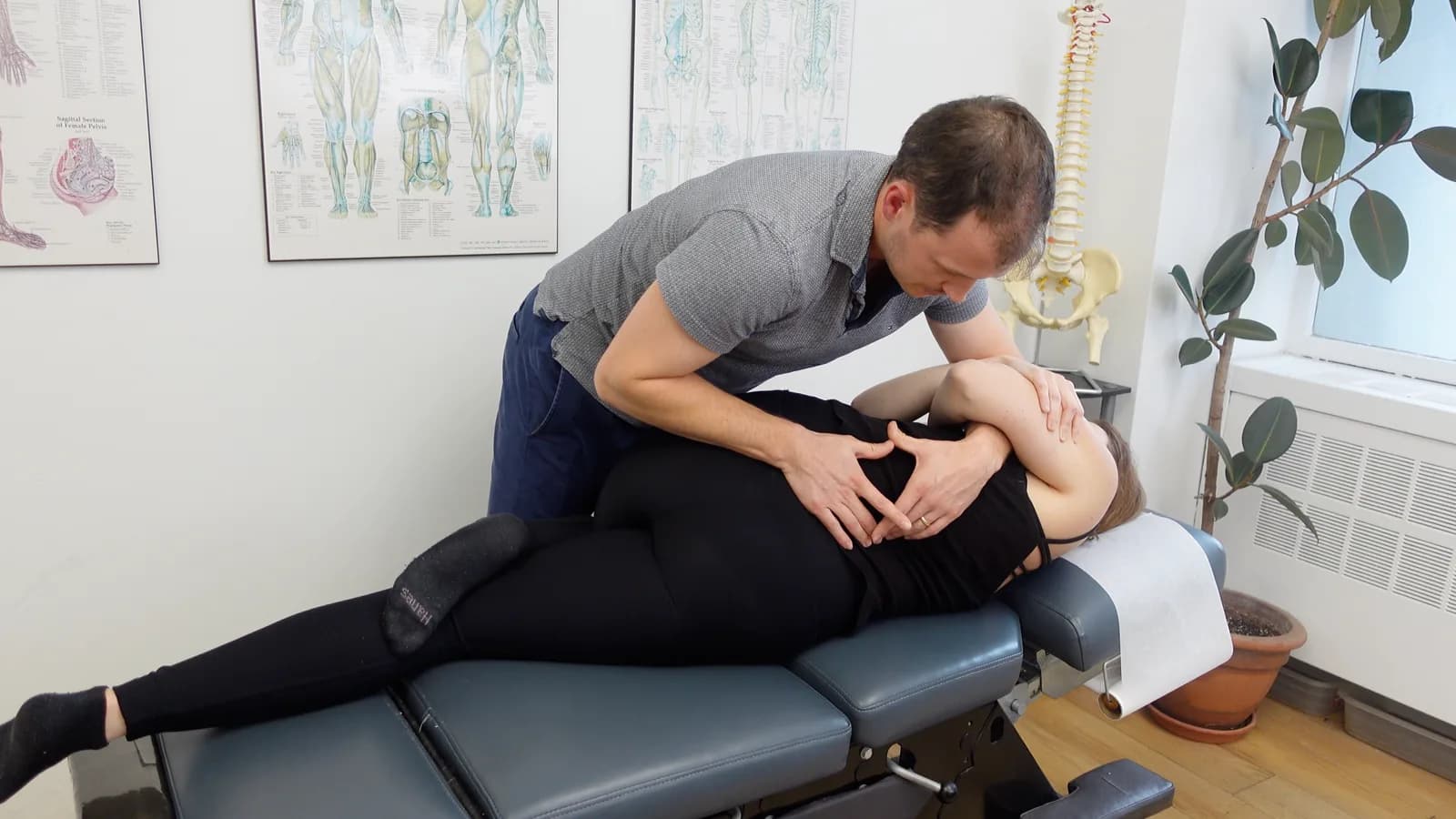
- manual therapy when appropriate
- medication when appropriate and discussed with a physician or pharmacist
- occasionally an epidural injection
- surgical assessment in a smaller group of patients
Current research reinforces why treatment needs to be individualized. Recent 2025 systematic reviews found very low-certainty evidence regarding which non-surgical treatments are superior for both acute/subacute and chronic sciatica.
In other words, there isn't currently good evidence for a single “best treatment for sciatica.”
Should I Stretch My Sciatic Nerve?
Be cautious with the idea that an irritated nerve simply needs to be “stretched.”
Neural mobilization exercises may be useful for some patients with lumbar radicular symptoms. A systematic review and meta-analysis found improvements in pain and disability, although there was substantial variability between studies.
These exercises are generally designed to move the nervous system through a tolerable range rather than aggressively stretching an already sensitive nerve.
If repeatedly stretching your hamstring or sciatic nerve substantially increases symptoms further down the leg, more stretching isn't necessarily better.
How Should I Sit to Relieve Sciatica?
There isn't one correct sitting posture for sciatica.
This is an important point because the position that helps one person may aggravate another.
For example, some people with disc-related symptoms find prolonged sitting or flexion uncomfortable. A small lumbar support, slight recline or changing positions may help.
Someone with lumbar spinal stenosis can have a very different experience. Extension of the lumbar spine may aggravate symptoms in some people with stenosis, while sitting or leaning slightly forward can actually feel better.
Rather than trying to maintain one “perfect” posture, I usually recommend:
Find a comfortable position, change positions regularly and pay attention to what happens to your leg symptoms.
Getting up periodically, walking briefly, reclining when necessary and alternating positions may be much more useful than trying to sit perfectly upright for eight hours.
Sitting isn't inherently bad for your spine. The goal is to find positions you tolerate and gradually build your ability to perform the activities you need and want to do.
Can Sciatica Be Cured?
It depends on what is causing it.
Many episodes of sciatica associated with lumbar disc herniation improve with conservative care and time. Disc herniations themselves can also decrease in size without surgery.
That doesn't mean everyone should simply wait indefinitely.
Persistent severe pain, progressive neurological symptoms or symptoms that significantly interfere with function may require further investigation or different treatment.
The goal should therefore be less about finding a single “cure for sciatica” and more about:
- determining the likely cause,
- ruling out important neurological or medical conditions,
- helping control symptoms,
- maintaining or restoring function, and
- monitoring recovery.
What Can Be Mistaken for Sciatica?
Quite a few things.
This is one reason I don't consider “sciatica” alone to be a particularly useful diagnosis.
Pain from the hip, sacroiliac region, muscles and tendons around the hip, peripheral nerves and other structures can travel into the buttock or leg and resemble sciatica.
One example is deep gluteal syndrome, where the sciatic nerve can become irritated within the deep gluteal region. Piriformis syndrome falls within this broader group of conditions.
Piriformis syndrome gets discussed frequently online, but it is much less straightforward than many articles suggest. Diagnosis can be difficult, and buttock pain alone doesn't mean that the piriformis muscle is trapping the sciatic nerve.
Other potential mimics include hip disorders, proximal hamstring conditions, peripheral nerve entrapments and referred musculoskeletal pain.
Rarely, vascular disease, infection, tumour or other neurological conditions can also produce leg symptoms.
An examination helps us determine whether symptoms behave like nerve-root pain from the lumbar spine or whether we should be looking somewhere else.
How Is Sciatica Assessed?
This is where a detailed clinical assessment becomes particularly valuable.
In my role as an Advanced Practice Provider with Ontario's Rapid Access Clinic for Low Back Pain, assessing people with back and leg symptoms is an important part of determining who can be managed conservatively and who may require imaging, specialist assessment or another pathway of care.
An assessment may include:
- how the symptoms started and how they have changed
- the location and behaviour of the leg symptoms
- movements or positions that aggravate and relieve symptoms
- strength testing
- reflexes
- sensation
- nerve tension testing
- lumbar spine movement
- hip assessment when appropriate
- walking and functional testing
- screening for neurological and other red flags
The purpose isn't simply to determine whether someone “has sciatica.” It's to understand why that person has leg symptoms and whether there is evidence of nerve-root involvement or another condition that needs attention.
Do I Need an MRI for Sciatica?
Usually not immediately.
For uncomplicated acute low back pain with or without radicular symptoms and no concerning clinical findings, guidelines generally recommend against routine early imaging.
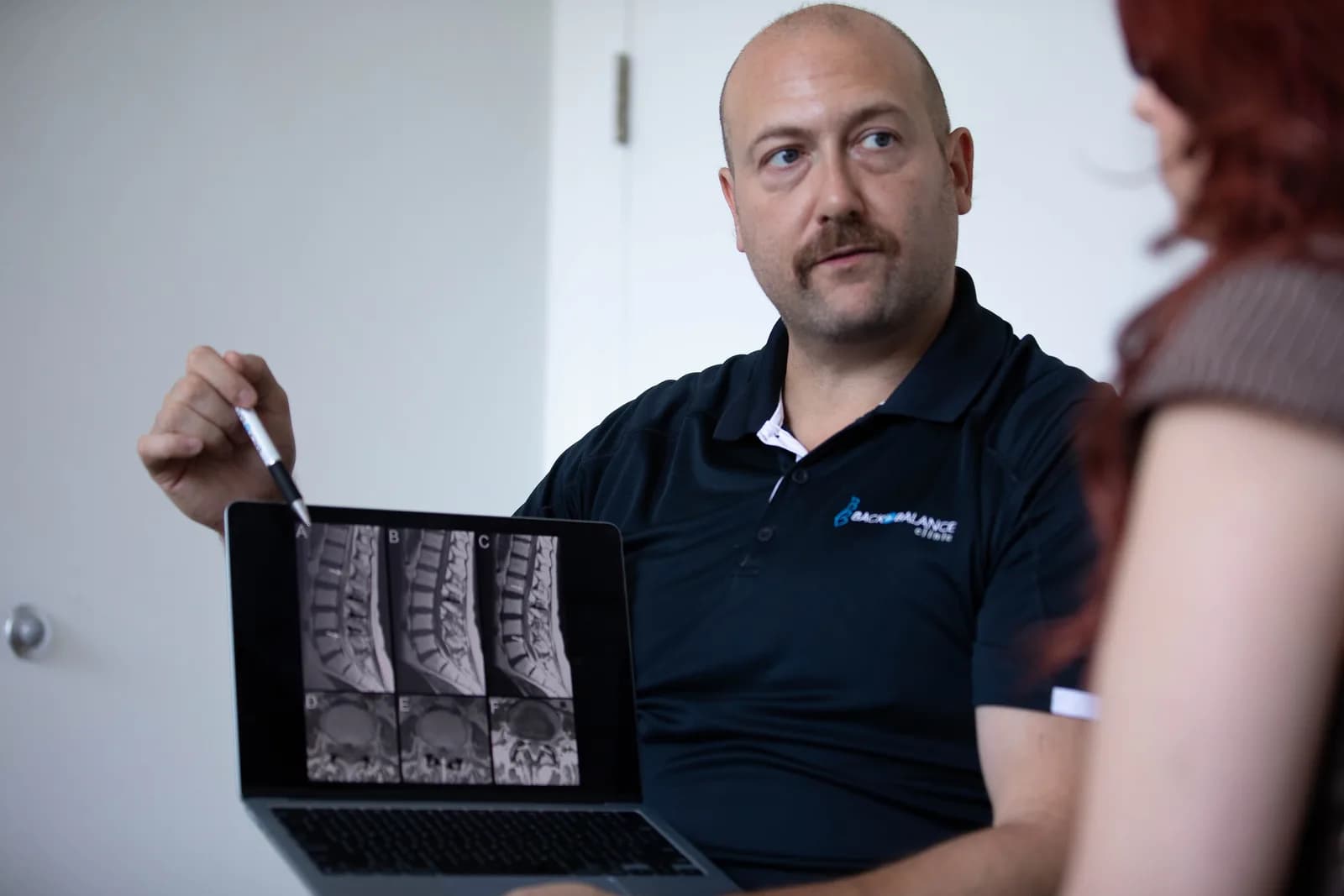
An MRI becomes more useful when the result is likely to change what we do—for example, when symptoms persist despite appropriate conservative management and an injection or surgical consultation is being considered, or when significant or progressive neurological findings are present.
This is another reason the clinical examination comes first.
Related article: [Should I Get Imaging for My Low Back Pain?]
Do Epidural Injections Help Sciatica?
They can help some patients, but they aren't a cure.
A 2025 systematic review from the American Academy of Neurology found that epidural steroid injections probably provide modest short-term improvements in pain and disability for cervical and lumbar radiculopathy. Evidence for longer-term pain relief is less certain.
An injection may therefore be useful in selected cases—for example, when severe symptoms are limiting someone's ability to function or participate in rehabilitation—but it doesn't necessarily address every factor contributing to the problem.
When Is Surgery Considered for Sciatica?
Most people presenting with sciatica do not automatically require surgery.
Surgical assessment becomes more relevant when there is an appropriate structural cause that corresponds with the patient's symptoms and examination and:
- severe symptoms remain disabling despite appropriate non-surgical management
- neurological function is deteriorating
- significant weakness is present or progressing
- imaging demonstrates a lesion that corresponds with the clinical findings
The decision isn't based on an MRI finding alone.
A large disc herniation can look dramatic on imaging while the patient improves clinically. Conversely, progressive weakness can make a situation considerably more important even if pain isn't worsening.
When Is Sciatica an Emergency?
Seek urgent medical assessment if back or leg symptoms are accompanied by:
- new difficulty controlling your bladder or bowels
- loss of sensation around the genitals, inner thighs or saddle region
- rapidly progressive or significant leg weakness
- severe symptoms involving both legs, particularly with neurological changes
These can indicate significant compression of the nerves at the bottom of the spinal canal, including cauda equina syndrome, which requires urgent investigation.
Other features such as fever, unexplained weight loss, significant trauma, a history of cancer or symptoms suggesting infection also warrant appropriate medical assessment.
The Takeaway
Sciatica describes a symptom—it doesn't tell us exactly what is causing it.
For some people, the problem may be irritation of a lumbar nerve root associated with a disc herniation. For others, degenerative narrowing, spinal stenosis or a problem outside the lumbar spine may produce similar symptoms.
That's also why there isn't one perfect sciatica stretch, sitting position or treatment.
Most importantly, leg pain doesn't automatically mean that a nerve is damaged, and a disc herniation doesn't automatically mean you need surgery.
A good assessment should help determine the likely cause, identify neurological findings that need closer attention and develop a plan that helps you stay active and gradually return to the things you need and want to do.
If you're experiencing persistent back and leg symptoms, an assessment at Back In Balance can help determine whether conservative care is appropriate or whether imaging, medical assessment or another referral pathway should be considered.
References
American College of Radiology. (2021). ACR Appropriateness Criteria®: Low Back Pain. American College of Radiology.
Lin, L.-H., Lin, T.-Y., Chang, K.-V., Wu, W.-T., & Özçakar, L. (2023). Neural mobilization for reducing pain and disability in patients with lumbar radiculopathy: A systematic review and meta-analysis. Life, 13(12), 2255.
National Institute for Health and Care Excellence. (2020). Low back pain and sciatica in over 16s: Assessment and management (NG59). NICE.
Price, M. R., Mead, K. E., Cowell, D. M., Troutner, A. M., Barton, T. E., Walters, S. A., & Daniels, C. J. (2024). Medication recommendations for treatment of lumbosacral radiculopathy: A systematic review of clinical practice guidelines. PM&R, 16(10), 1128–1142.
Zhu, Z., Schouten, T., Strijkers, R., Koes, B., Chiarotto, A., & Gerger, H. (2025). Effectiveness of nonsurgical interventions for patients with acute and subacute sciatica: A systematic review with network meta-analysis. Journal of Orthopaedic & Sports Physical Therapy, 55(6), 1–12.
Zhu, Z., Schouten, T., Strijkers, R., Koes, B., Gerger, H., & Chiarotto, A. (2025). Effectiveness of non-surgical interventions for patients with chronic sciatica: A systematic review with network meta-analysis. The Journal of Pain, 33, 105431.
Zou, T., Liu, X.-Y., Wang, P.-C., Chen, H., Wu, P.-G., Feng, X.-M., & Sun, H.-H. (2024). Incidence of spontaneous resorption of lumbar disc herniation: A meta-analysis. Clinical Spine Surgery, 37(6), 256–269.