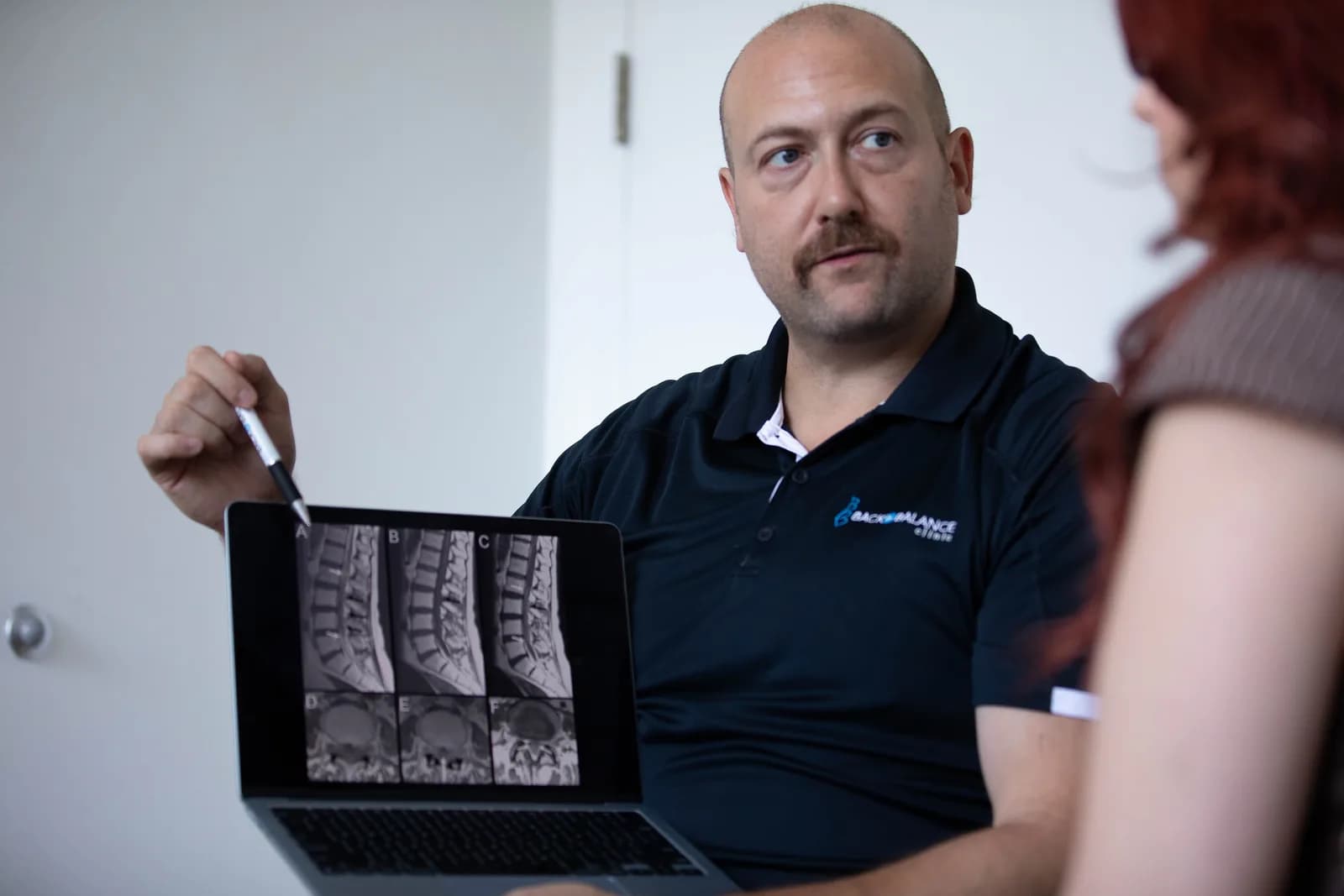

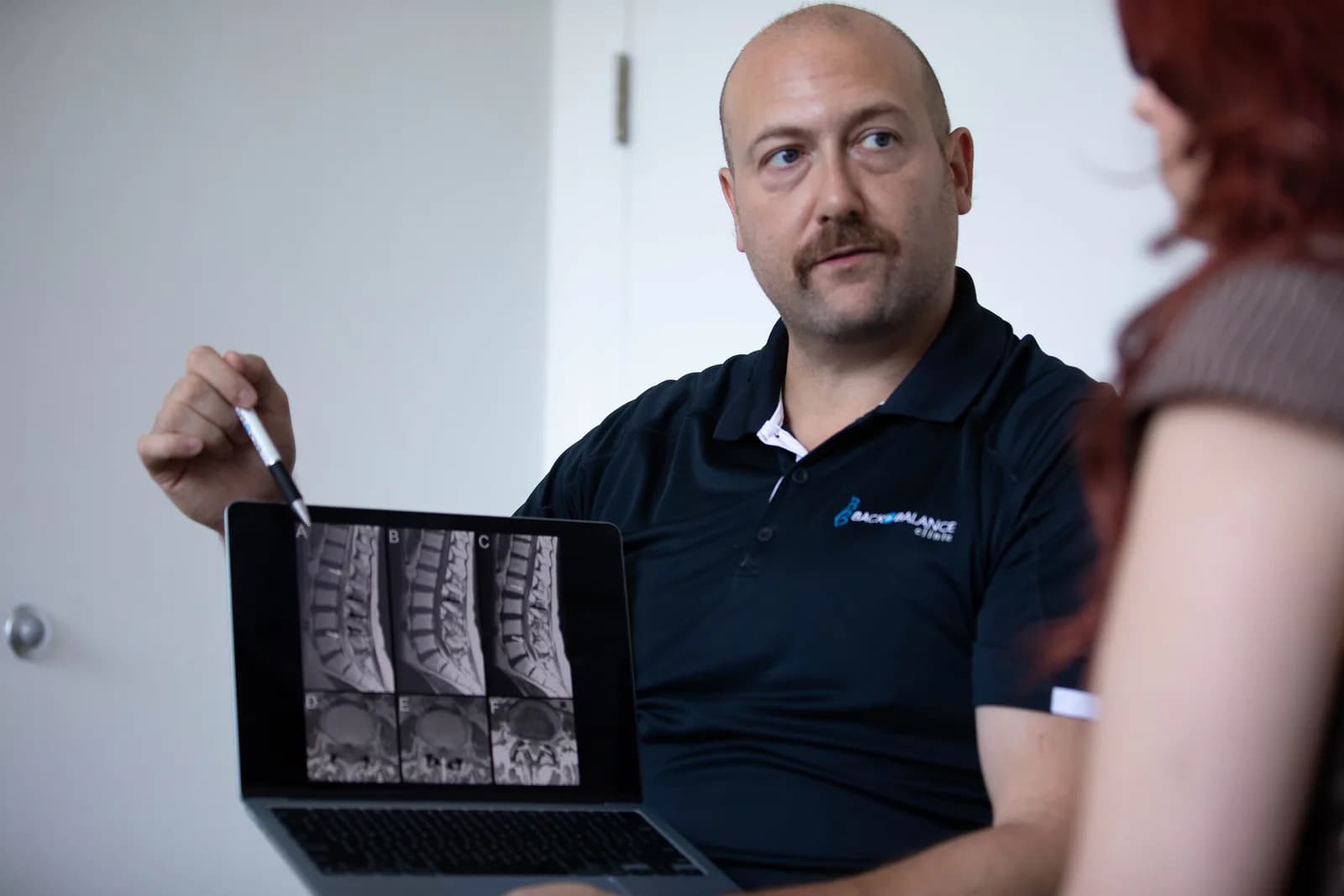
A disc bulge on an MRI doesn’t automatically mean you’ve injured your back or that the bulge is causing your pain. Disc bulges are common in people who have never had back pain. A bulge can also matter, especially when the scan shows a nearby nerve being compressed and the location fits your leg symptoms and exam findings. Brinjikji et al., 2015, Fardon et al., 2014
What does a disc bulge on an MRI mean?
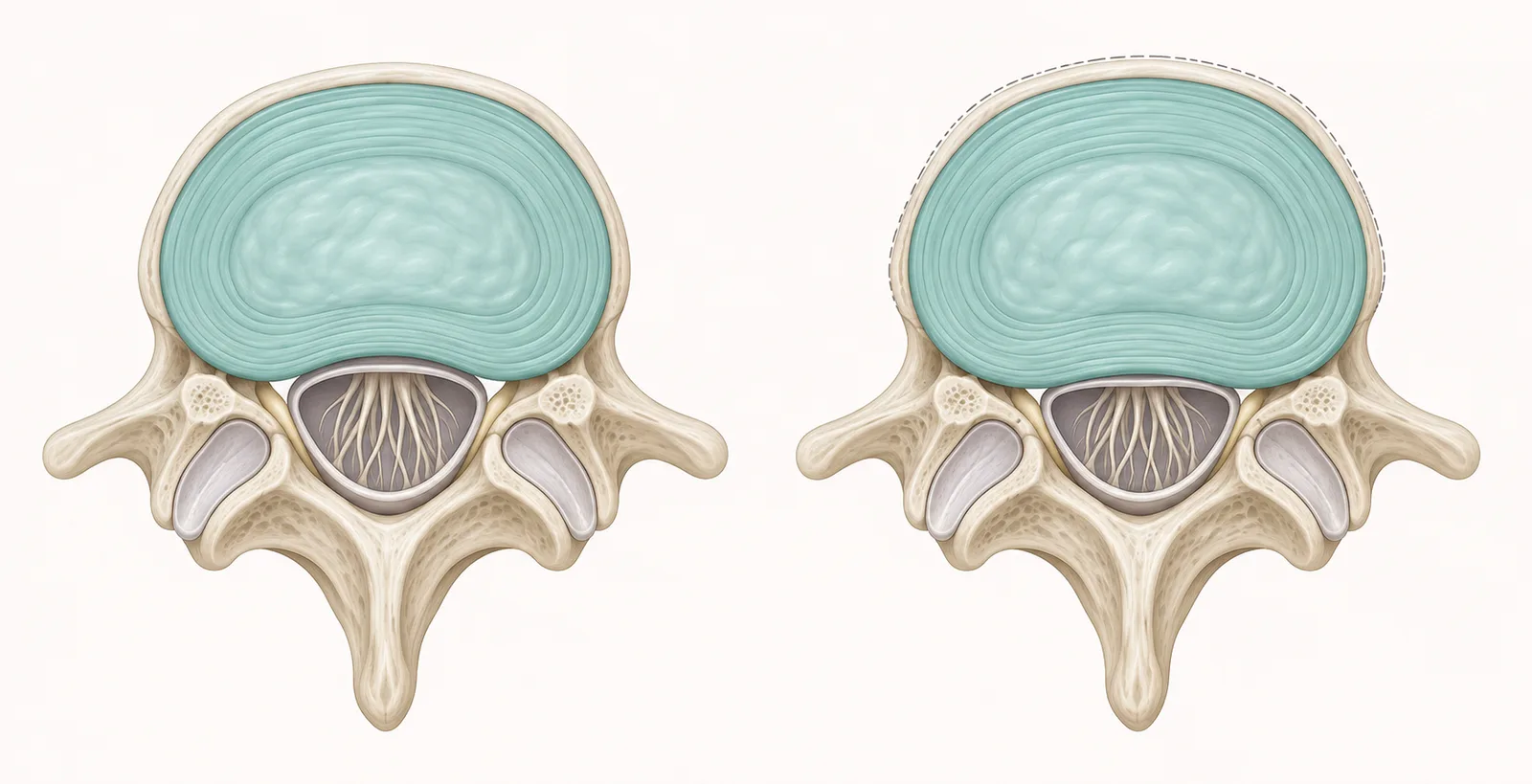
Discs sit between the bones of your spine. A bulge means part of the disc’s outer edge extends beyond its usual outline over a broad area. It describes a shape on the scan. Fardon et al., 2014
In a systematic review of people without back pain, researchers estimated that disc bulges were present in about 3 in 10 people at age 20 and 8 in 10 at age 80. Those are estimates for groups of people. Whether a particular bulge helps explain your symptoms depends on what else the scan and exam show. Brinjikji et al., 2015
How can you tell whether a disc bulge is causing symptoms?
A clinician looks at where you feel the pain, what makes it better or worse, and whether there are changes in leg strength, sensation, or reflexes. For example, if you have pain down your right leg and the exam points to the same right-sided nerve that appears compressed on your MRI, the finding is more likely to matter. If the scan finding and symptoms don’t line up, it’s worth considering other explanations. NICE guidance on low back pain and sciatica, Back in Balance’s guide to sciatica and leg pain
The activities that bother you also help guide care. Someone whose back aches after sitting through a commute may need a different starting point from someone whose leg pain and numbness make walking difficult. A movement pattern can help guide your first exercises even when the exact source of the pain is uncertain. Four common low back pain patterns and how they’re treated
Can I still walk, bend, or lift with a disc bulge?
In many cases, yes. Start with a version of the activity you can manage. If a 20-minute walk repeatedly flares your symptoms, try shorter walks and build up as tolerated. If lifting from the floor is difficult, you might start with a lighter load or lift from a higher surface. The goal is to gradually rebuild tolerance for what you need to do at work, at home, or in the gym. NICE guidance on staying active and exercise
If leg pain keeps spreading farther down the leg, numbness is increasing, or you’re losing strength, get assessed before progressing your exercises. New or worsening leg weakness needs urgent medical assessment. Back in Balance’s guide to disc-related pain and sciatica
References
Brinjikji, W., Luetmer, P. H., Comstock, B., Bresnahan, B. W., Chen, L. E., Deyo, R. A., Halabi, S., Turner, J. A., Avins, A. L., James, K., Wald, J. T., Kallmes, D. F., & Jarvik, J. G. (2015). Systematic literature review of imaging features of spinal degeneration in asymptomatic populations. American Journal of Neuroradiology, 36(4), 811–816. https://doi.org/10.3174/ajnr.A4173
Fardon, D. F., Williams, A. L., Dohring, E. J., Murtagh, F. R., Gabriel Rothman, S. L., & Sze, G. K. (2014). Lumbar disc nomenclature: Version 2.0: Recommendations of the combined task forces of the North American Spine Society, the American Society of Spine Radiology and the American Society of Neuroradiology. The Spine Journal, 14(11), 2525–2545. https://doi.org/10.1016/j.spinee.2014.04.022
National Health Service. (n.d.). Slipped disc. NHS patient guidance
National Institute for Health and Care Excellence. (2020). Low back pain and sciatica in over 16s: Assessment and management (NICE Guideline NG59). NICE recommendations
National Institute for Health and Care Excellence. (2023). Suspected neurological conditions: Recognition and referral (NICE Guideline NG127). NICE recommendations for adults